
Heavy hearts and empty wallets: more than £94.7 million lost to romance fraud in the last year
Cynnwys y prif erthygl
Romance seekers are urged to be on their guard as they look for love this summer, as reports of this devastating fraud have increased by over 8 per cent in the last year.
Romance seekers are urged to be on their guard as they look for love this summer, as reports of this devastating fraud have increased by over 8 per cent in the last year.
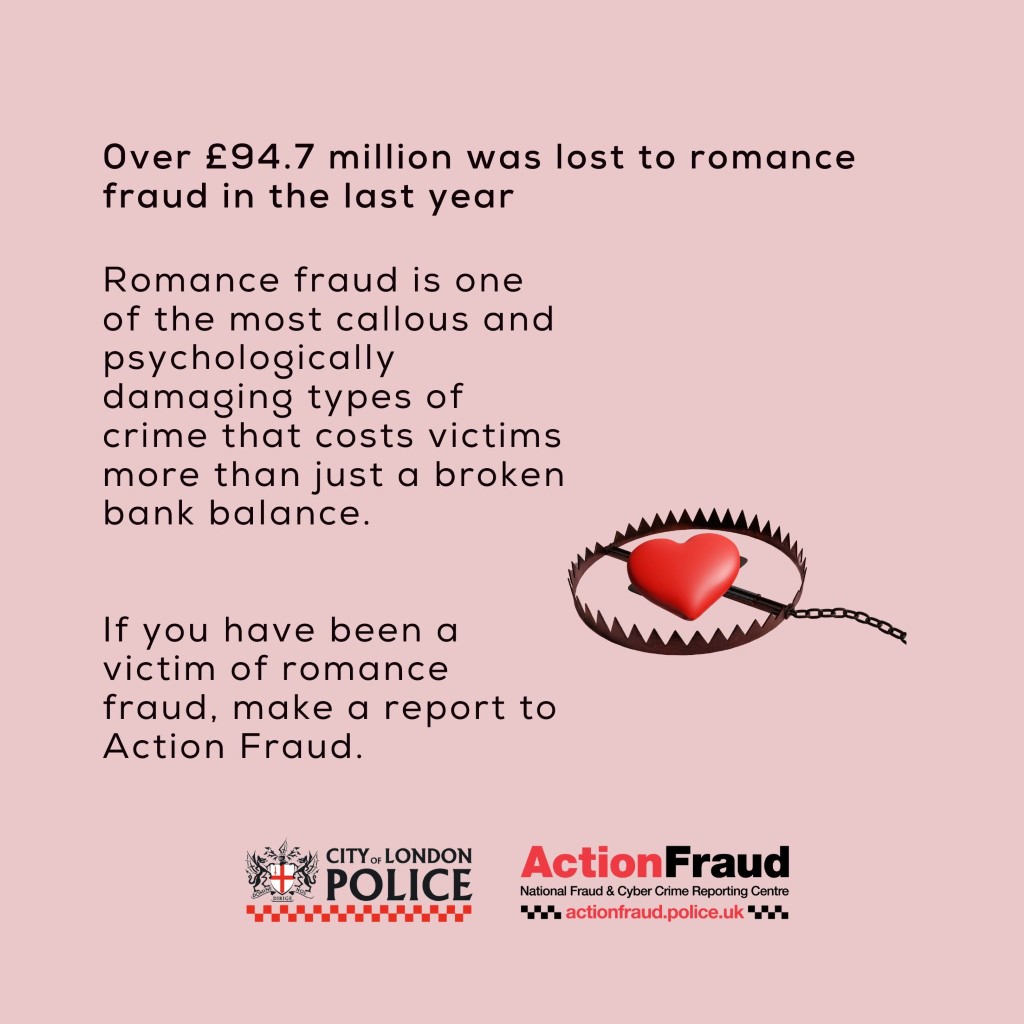
In the last year, the National Fraud Intelligence Bureau (NFIB), run by the City of London Police, received 8,792 reports of romance fraud, amounting to losses of over £94.7 million. The average loss per person was £10,774.
Detective Superintendent Oliver Little, from the City of London Police, said:
“Romance fraud continues to be one of the most common types of fraud that is reported and it is shocking to see an increase of nearly 10 per cent in the number of reports made in the last year.
“Despite this increase, we know romance fraud is a heavily underreported crime so it is likely to be significantly more widespread. We encourage everyone to come forward if they think they could be a victim.
“There is no shame in telling your story, as it is through this sharing of intelligence that can really help us learn about the tactics used and, ultimately, catch those responsible. Your report may be the final piece in the puzzle, as often these callous criminals will target more than one person.”
For almost a third of those targeted, fraudsters spent more than a year using various tactics to build trust and companionship. This long-term form of coercion is then used to engineer scenarios that pressure victims into handing over money. This could include paying for travel, convincing the victim to pay for an item such as a mobile phone, and, in some cases, taking out loans or making investments on their behalf.
Of the reports made 45 per cent of approaches were via online dating sites, 41 per cent were made by social media and 12 per cent via communications platforms. Increasingly criminals approach targets on social media and communications platforms rather than dating sites, as such approaches are less expected. Some reporting also suggests that criminals are using cold outreach methods, for example ‘wrong number’ messages and hacked social media accounts, to approach targets.
Contrary to common misconceptions, there is a fairly equal split between male and female victims (42 per cent and 58 per cent respectively) and all age groups are affected. Men aged 50–79 and women aged 30-79 report the most.
How to stay safe from romance fraudsters:
- If you have met someone via a dating app, stay within the messaging function of the application. Don’t feel pressured to hand over your mobile number and move the conversation over to SMS or a messaging platform like Whatsapp or Telegram.
- Be suspicious of any requests for money from someone you have never met in person.
- Be cautious about how much personal information you are sharing online and who you are sharing information with.
- Speak to your family or friends to get advice and perspective. Fraudsters will subtly isolate you for their own purposes.
- Profile photos may not be genuine. Performing a reverse image search can find photos that have been taken from somewhere, or someone, else.
It is important that no matter how long you’ve been speaking to someone online and how much you think you trust them, if you have not met them in person, it’s important that you do not:
- send them any money, even in the form of gift cards;
- allow them access to your bank account;
- transfer money on their behalf;
- take a loan out for them;
- provide copies of your personal documents, such as passports or driving licenses;
- invest your own money on their behalf or on their advice;
- purchase and send the codes on gift cards; or
- agree to receive and/or send parcels on their behalf (laptops, mobile phones etc.).
Romance fraud is one of the top five most commonly reported frauds to Action Fraud, the national fraud and cybercrime reporting service for England, Wales and Northern Ireland. Action Fraud also run the National Economic Crime Victim Care Unit (NECVU) which provides support and advice to victims of fraud and helps prevent them from falling victim to fraud again.
To report fraud to Action Fraud, fill out the online fraud reporting tool or call 0300 123 2040. In Scotland, call Police Scotland on 101. If you have lost any money, it is important you also immediately report it to your bank by calling the number on the back of your bank card.